01
Mold needs three things
Spores, an organic food source such as paper faced drywall or wood, and moisture. You cannot remove spores or building materials from the equation, so remediation always comes back to controlling moisture.

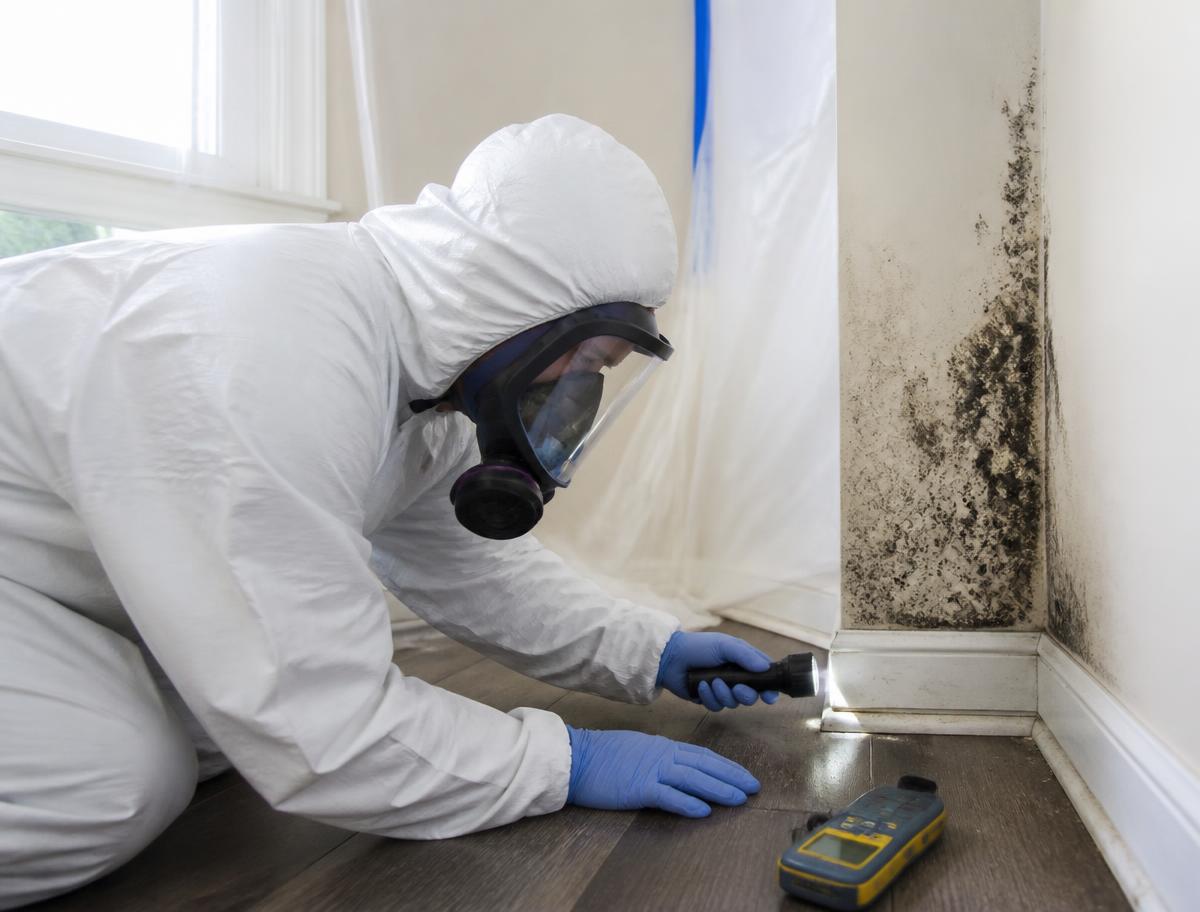
Mold Remediation
Mold grows wherever moisture lingers. Here is what causes it, what to look for, and how remediation works.
Available 24/7/365 · 60 minute response to the Greater Tulsa metro · IICRC licensed and insured
Overview
Mold remediation is the process of identifying the moisture source causing mold growth, removing or treating affected materials, and addressing the underlying moisture problem so mold does not return.
Remediation is different from simple cleaning. It addresses the cause, not just visible growth.
What to look for
Learn the basics
Mold spores exist in every building. The question is never whether spores are present, it is whether they have the moisture they need to grow.
Spores, an organic food source such as paper faced drywall or wood, and moisture. You cannot remove spores or building materials from the equation, so remediation always comes back to controlling moisture.
Wiping visible growth off a surface leaves the cause in place. Remediation means containing the area, removing or treating affected material, filtering the air, and correcting the water problem that started it.
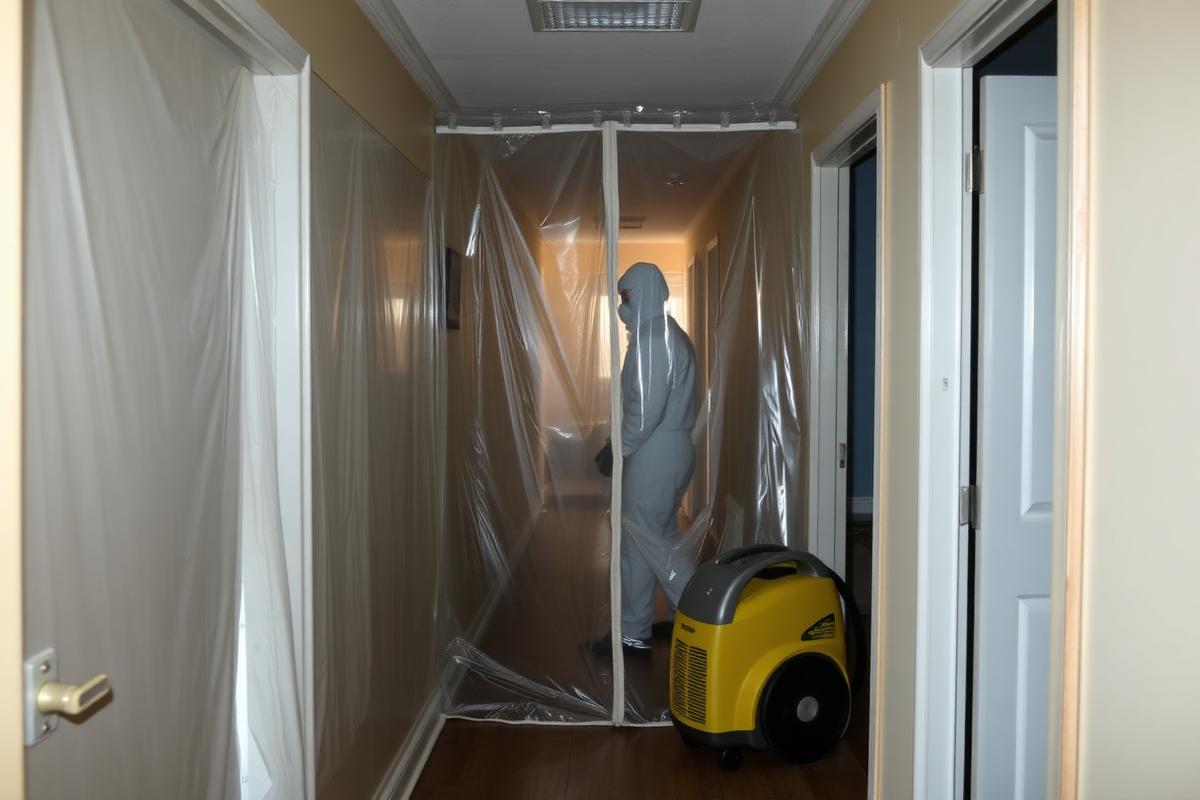
Disturbing growth releases spores. Plastic barriers, negative air pressure, and HEPA filtration keep the work area from seeding the clean parts of the home.
No dramatic leak is required. A bathroom with a weak fan, an unvented crawl space, or a home held above 60 percent relative humidity can grow mold on its own over time.
Timeline
Find the water: identify and confirm the moisture source before anything is removed.
Contain and filter: isolate the work area and control the air in it.
Remove and treat: take out affected material and clean what stays.
Fix the cause: repair the leak or ventilation issue so it does not return.
Our process
The same IICRC standard steps every time, explained plainly so you know what to expect.
Step 1 of 4
Identifying visible mold and the moisture source driving it.
Step 2 of 4
Where applicable, containing the affected area to prevent spread during remediation.
Step 3 of 4
Removing or treating affected materials.
Step 4 of 4
Addressing the underlying cause so mold does not return.
Why choose Spartan
Licensed and insured (#6302400). Family owned and local, based in Bixby and serving the Greater Tulsa metro.
Our mold work follows industry standard containment and moisture control practice, and it is built on the same principle as our water work: fix the source or the growth comes back. Licensed and insured, IICRC certified #6302400, with the same crew handling the repairs afterward.
Good to know
Mold varies. Some types trigger allergies or respiratory irritation for people who are sensitive, and others are mostly a sign of a moisture problem. A professional assessment is what determines the next step.
A small patch of surface mold on a hard surface is often something a homeowner handles. Growth spread across materials, behind walls, or tied to an ongoing leak is remediation scale work and needs the moisture source fixed too.
Our focus is finding the moisture source and removing affected material. When a property needs formal testing or clearance sampling, that is handled by an independent third party so the testing stays separate from the remediation work.
Bleach can lighten surface staining on hard, non porous material, but it does not fix the moisture problem and it does not reach growth inside porous material like drywall or wood. The stain fading is not the same as the problem being solved.
Not if the water source is corrected. Mold returns when the leak, humidity, or ventilation problem that fed it is left in place, which is why moisture correction is part of the job rather than an upsell.
Common clues are a musty smell with no visible growth, staining or bubbling on drywall, a past leak in that area, or unexplained allergy symptoms in one room. An inspection with moisture meters confirms it.
It depends on the cause and your policy language. Mold that follows a covered sudden water loss is often covered at least in part, while mold from long term humidity or a maintenance issue usually is not.
Keep indoor humidity under about 50 percent, run bathroom and kitchen exhaust fans, fix small leaks quickly, keep gutters draining away from the foundation, and watch crawl spaces after heavy rain.
Call now for a 60-minute response from a team that treats your home like our own.
24/7 emergency response · Licensed & insured · Works with all insurance carriers