
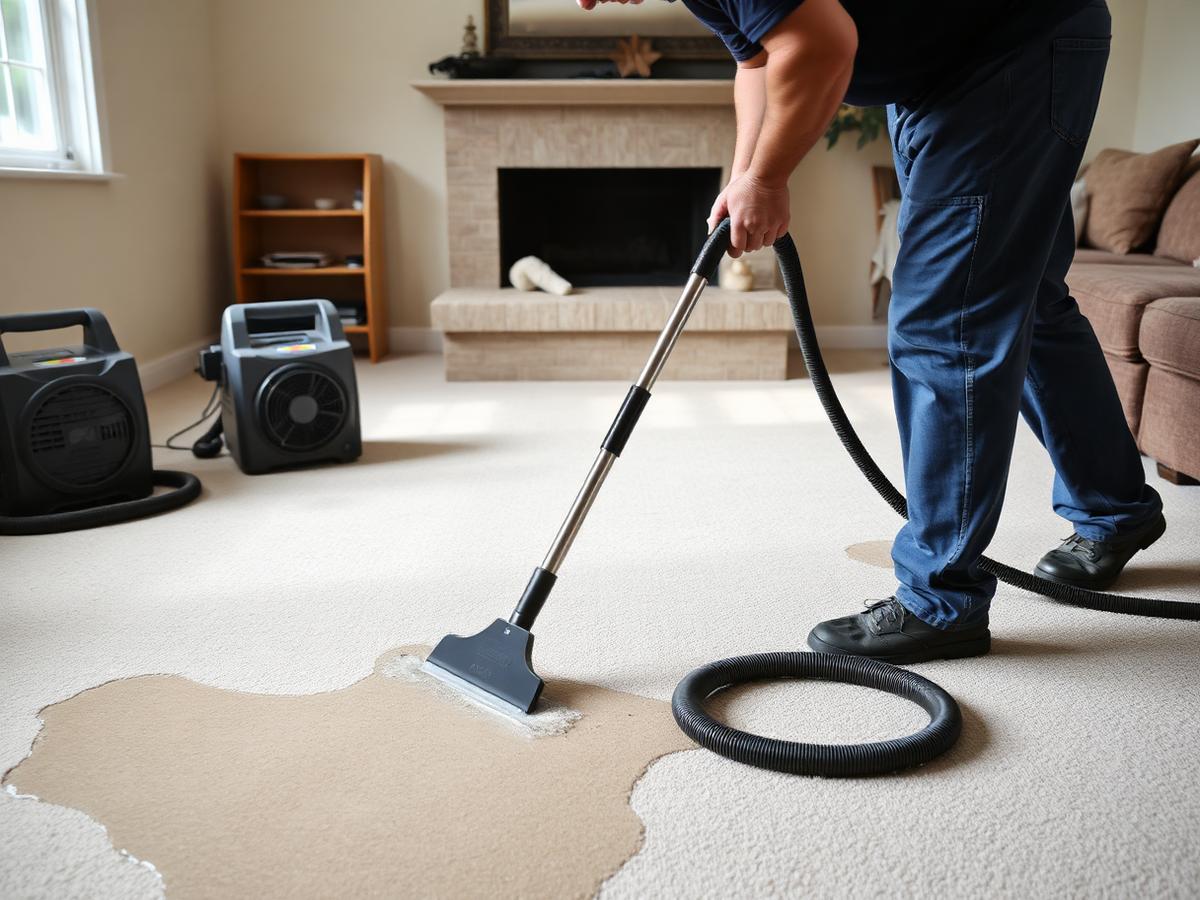
Technician documenting moisture readings in a water damaged living room

Water Damage Restoration

Understanding Water Damage Restoration

From a burst pipe to a slow leak, water damage follows a predictable process. Here is how Spartan Home Services identifies, mitigates, and monitors it.

Available 24/7/365 · 60 minute response to the Greater Tulsa metro · IICRC licensed and insured

24-48 hrs
Window before mold can begin growing on wet materials
3-5 days
Typical structural drying time for a contained loss
60 min
Target response time across the Greater Tulsa metro

Overview

What is water damage restoration?

Water damage restoration is the process of removing excess water from a structure, drying out affected materials, and preventing secondary damage like mold growth or structural weakening.

It starts with identifying where the water came from, not just cleaning up what is visible.

Common causes

  • Burst or leaking pipes
  • Appliance malfunctions such as water heaters, washing machines, and dishwashers
  • Roof leaks
  • Foundation seepage
  • Storm driven water intrusion
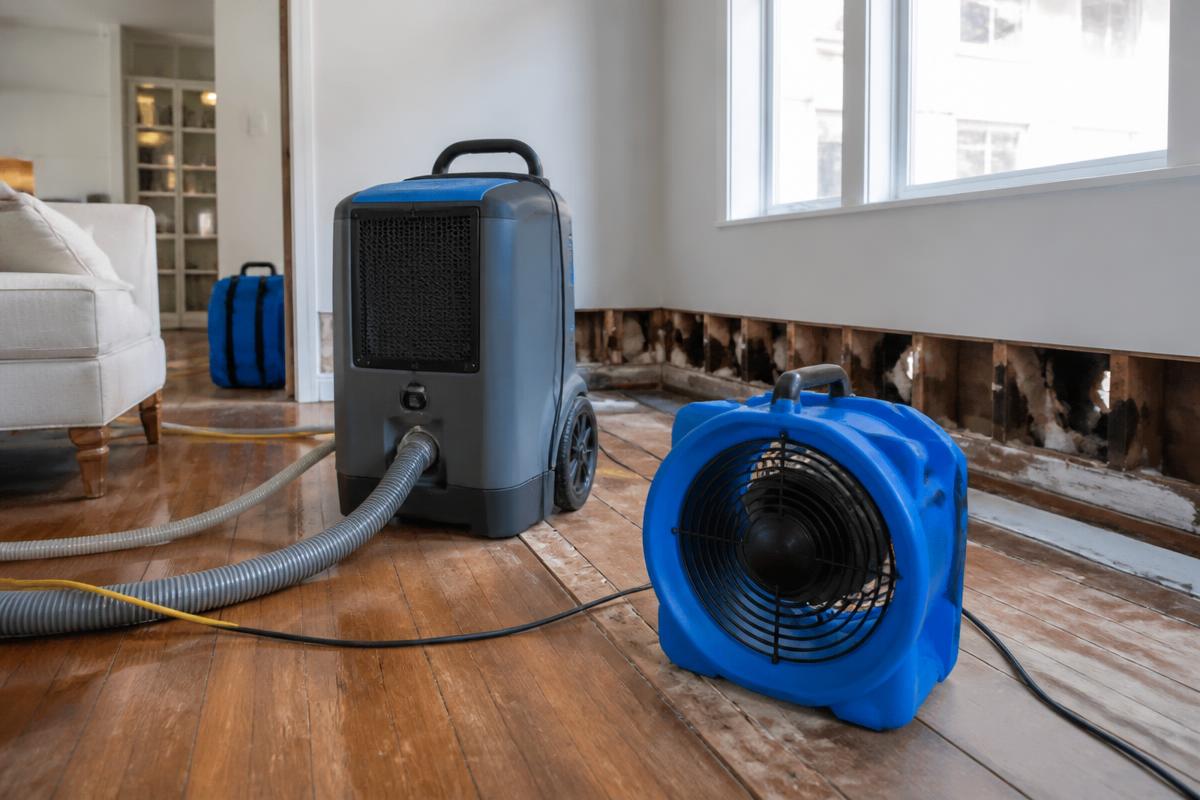
Commercial dehumidifier and air mover drying a hardwood floor with the wet drywall removed
Technician documenting moisture readings in a water damaged living room

What to look for

Signs you may have hidden water damage

  • 1Musty or earthy smell that does not go away after cleaning
  • 2Buckling, cupping, or soft spots in flooring
  • 3Bubbling paint, stained drywall, or a dark line along the baseboard
  • 4Spike in the water bill with no change in usage
  • 5Cool or damp patches on walls and floors

Learn the basics

What actually happens to a wet house

Water damage is a physics problem before it is a cleanup problem. Understanding how moisture moves explains why professional drying looks the way it does.

01

Water travels sideways, not just down

Drywall, insulation, and subfloor wick moisture away from the leak through capillary action. A puddle in the kitchen often means damp material two rooms over, which is why we map the affected area with meters instead of eyeballing it.
02

Categories and classes drive the scope

The IICRC S500 standard sorts losses by water category (clean supply water, gray water, contaminated black water) and by class, which measures how much material got wet. Those two labels decide what can be dried in place and what has to be removed.

03

Drying is measured, not guessed

Dry means back to the documented dry standard for that material, confirmed with moisture readings over several days. Equipment that is pulled too early leaves moisture behind walls where nobody can see it.

04

Air movers and dehumidifiers do different jobs

Air movers pull moisture out of materials and into the air. Dehumidifiers pull that moisture out of the air and dump it as water. You need both, sized to the room, or you are just moving damp air around.

Timeline

Why the first day matters most

  1. Hours 1 to 24: water is still on the surface and in the top layers. Most materials can be dried and saved.

  2. Hours 24 to 48: moisture is deeper in drywall and subfloor. Mold growth becomes possible and some material has to come out.

  3. Day 3 and beyond: swelling, warping, and microbial growth are common, and the repair scope grows quickly.

Our process

How the work actually goes

The same IICRC standard steps every time, explained plainly so you know what to expect.

  1. 01

    Step 1 of 3

    Initial inspection

    We diagnose the cause of the intrusion and identify any known safety hazards before work begins.

  2. 02

    Step 2 of 3

    Equipment setup

    We place the proper amount of fans and dehumidifiers for the affected space, sized to the damage instead of a one size fits all setup.

  3. 03

    Step 3 of 3

    Continuous monitoring

    Affected areas are checked throughout the drying process, not just at the start and end, to confirm materials are drying at the expected rate.

Why choose Spartan

We work for you

IICRC WRT certified (Water Damage Restoration Technician), licensed (#6302400), fully insured. We work directly with your insurance carrier but represent your interests first, not the claim's bottom line.

  • IICRC licensed #6302400
  • Licensed and fully insured
  • 24/7/365, local to Bixby

Good to know

Frequently asked questions

How long does drying typically take?

Most residential drying runs about three to five days once equipment is set, though hardwood, plaster, and water that traveled under cabinets take longer. We give you a realistic timeline at the inspection and update it as moisture readings change.

Will you work with my homeowner's insurance?

Yes. We work with all carriers and can bill your insurance directly. We document the damage as we go so your adjuster has what they need.

What happens if water damage is not caught early?

Moisture that sits in walls, subfloors, or insulation can lead to mold growth and can break down structural materials over time. Catching it early usually means less material has to be removed.

Do I need to move out while my home is drying?

Most water losses can be dried with the family still living in the home, as long as the affected rooms can be closed off and there is safe access. If contaminated water or a large area is involved, we will tell you plainly before work starts.

Will my carpet and hardwood have to be replaced?

Not always. Carpet is often savable if the pad is replaced and the water was clean. Hardwood can sometimes be dried in place with specialty mats if we get to it early. Materials that stayed wet for days are far less likely to be saved.

Is the drying equipment noisy and does it raise my power bill?

Yes, air movers and dehumidifiers are loud and they do use electricity while they run, usually for a few days. Most carriers reimburse that power usage as part of the claim.

What is the difference between water mitigation and water restoration?

Mitigation is the emergency phase that stops the damage from spreading: extraction, demolition of unsalvageable material, and drying. Restoration is the repair phase that puts the home back together.

Can water damage cause mold even after everything looks dry?

Yes. Surfaces dry first while framing, insulation, and subfloor stay wet underneath. That hidden moisture is the most common cause of mold after a leak, which is why we verify with meters instead of by feel.

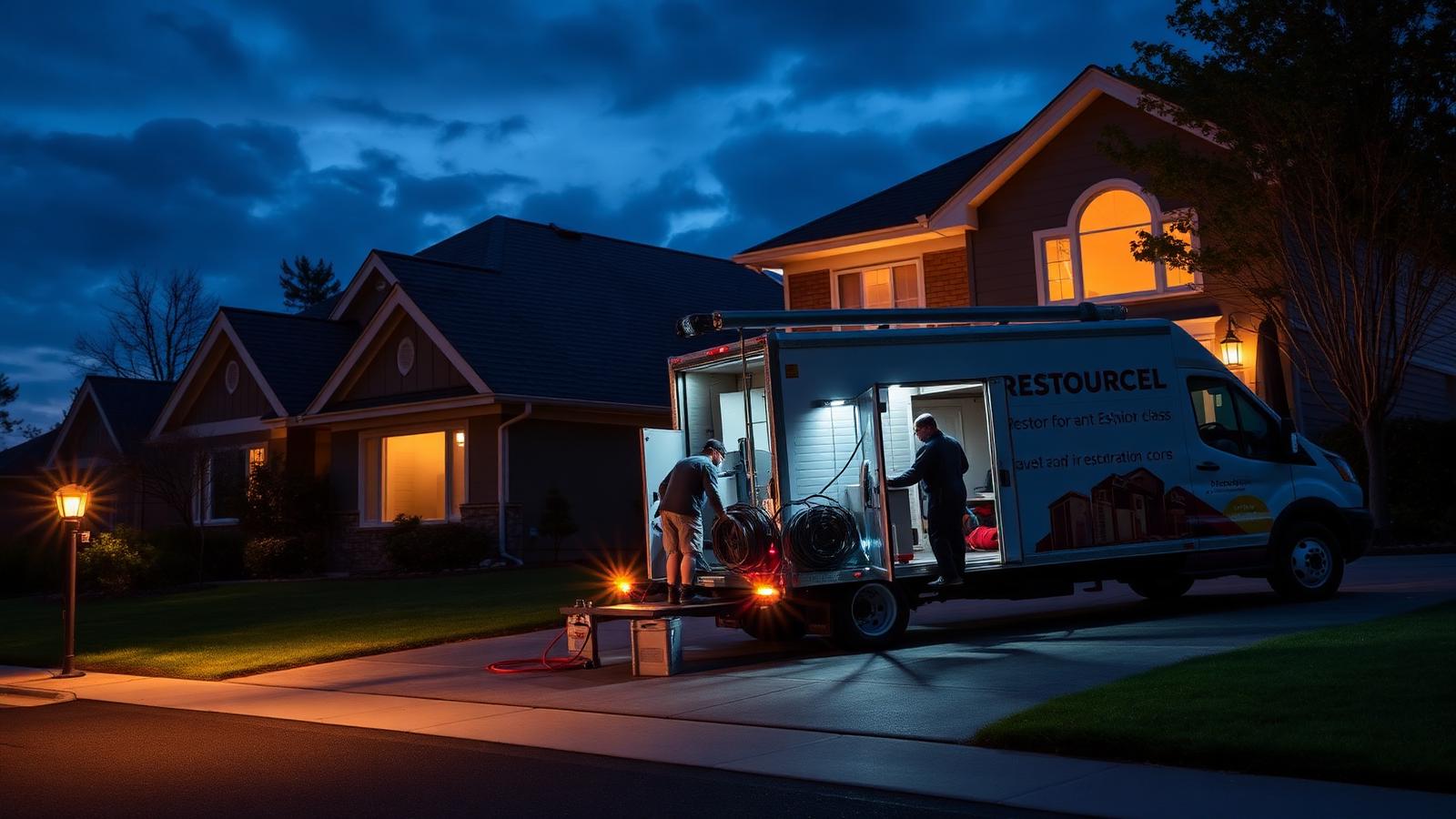
Spartan Home Services crew unloading drying equipment at a home in the evening

Questions about water damage at your property?

Call now for a 60-minute response from a team that treats your home like our own.

1
2
3
What kind of damage do you have?
Takes about 30 seconds

24/7 emergency response · Licensed & insured · Works with all insurance carriers

Call Now (918) 902-9789